Saturday, August 20, 2011

Annual Michael Collins commemoration takes place at Beal na mBlath

The annual commemoration of Irish hero and cultural legend Michael Collins takes place every year outside of the town of Clonakilty at a place called Beal na mBlath.
It is a celebration of the achievements of this military master mind and political genius during very turbulent times in Irish history.
It is at a commemoration where he was assassinated by opposition forces. This character of Irish history is often referred to as the Che Guevara of Ireland.


There is a Hollywood movie about Michael Collins1996 the movie with Liam Nealson, directed by Neil Jordan, Michael Collins plays a crucial role in the establishment of the Irish Free State in the 1920s, but becomes vilified by those hoping to create a completely independent Irish republic.


Friday, February 04, 2011

Global downturn is Ireland's economic collapse


Global downturn is Ireland's economic collapse:

The recent global slowdown has resulted in a reversion to the Ireland of the 1980's or even the 1950's

Whilst the problems are serious and severe one website has offered an aluminum shawl marketed along the lines of an old Irish tradition of shawl wearing offering protection.

It protects against the rain and the cold and is perfect for late night spreadsheet calculating and is moderately sustainable in the fact that it does not burn fossil fuels, unlike the coal fires of the 1950s in drafty post war housing estates in urban Ireland.
Not only does it protect from the elements it also might protect you from the current global downturn.
You can purchase your shawl by clicking the link above or you can check out www.rebelcounty.com


Happy Shopping!


Friday, November 19, 2010

Irish, Eu, IMF and calm discussion taking place regarding banking crisis!


Vision of Irish discussion with IMF
This is a quick preview of some of the possible discussions and leveraging regarding the recent banking crisis in Ireland a result of its downfall post the recent voluptuous Celtic tiger! It outlines some of the high price to paid for playing at the table with the big boys amongst other items of contention.


>

Saturday, October 09, 2010

So do you know how to Irish Dance


It's a little difficult to explain, but I'll try!


The first thing to remember is that at all times during the dance your arms must
be straight and held down by your sides (Like a soldier at Attention)

Basic Position

Start with your feet together with the heel of your right foot by the toes of your left foot. Feet at 90° to each other. This will mean your right knee has the left tucked behind.
This position is the normal position after each step, changing to ending with the left foot in front instead, and vice versa.
The Basic Steps

There are three basic steps to Light shoe dances, around which all dancers are built.
Teachers weave these into their choreography in different ways and vary them slightly, but if you can't master them in their basic form you will never really make the grade as a step dancer.

The basic steps are the Jump Threes, the Hop Threes and the Sevens or Side Step.

Jump Threes (basic step)

Start in Basic Position

1) Now lift the front leg (in this case the right) keeping it dead straight with the toes curled forwards, so don't try to lift too high. (The worst thing you can do is point your toes up so that people see the soles of your shoes)
Jump off the foot still on the floor onto the raised foot, landing just in front of where it started.
As you jump bring the back foot up to kick your behind.
This is all done at the same time so takes practice!
2) As you land, step forward onto the original back foot, placing it just in front of the other foot.
3) Tuck the original front foot "behind" to end up in "basic position" but with the other foot now in front

Jump threes are always started from whichever foot is in front.
Do threes very slowly to start with and build up speed. One Three per bar of music.
Once you have the hang of them try the lead round

Hops threes (basic step)

Start in Basic Position

1) Hop on the back foot as high as possible, landing back on the same foot.
At the same time the front foot is brought up across the knee of the other leg, as high as possible
(try to touch your hip with your toes)
2) step very slightly forward on front foot
3) tuck back foot behind

Hop threes are always started by hopping off whichever foot is behind. One three per bar of music.

Sevens or side step (basic step)

1) is a hop or jump
2) The leading foot is moved to the side
(for example, the leading foot is the right one so move right, left foot move left)
3) back foot moves the same direction but crosses behind
4) front foot again
5) back foot behind again
6) front foot again
7) back foot behind again
All Irish Step dances follow the same basic pattern.

There are usually several components :

The Lead Round

The First Step

The Second Step (or Lead Back)

As the dances become more advanced these become a little harder to distinguish. However in the early stages they are very easily defined. Below is a basic beginners reel.

A Beginners Reel

this is a Beginners Reel, so choose Reel music. Try not to make it too fast, as this is hard work!
A Reel is a soft shoe dance so either get some proper Irish shoes, or use ballet shoes or the like (preferably black)
For a costume you need something with a shorter skirt (above the knee) with plenty of material so that you can lift your legs freely. A Sports skirt would be fine, although something a little more colourful would be better.
A simple white blouse with loose sleeves would also suffice. If you really want to look traditional then take a simple scarf and pin it onto the left shoulder. Then drape it across the back and pin it at the waist on the right side.

Count the bars in your mind, stood in basic position.(the bars are usually easy to count in Irish music)
At the first note of the sixth bar point your front foot and toes forward moving the leg ahead of the back foot so that only the toes touch the ground.
Keep your feet in the same turned out position as in basic position.
You do not start dancing until the first note of the ninth bar

LEAD ROUND

The lead round is simply Eight continuous Jump threes in a circle, alternating leading legs.
You must end up back where you started, facing the front again.
As each persons jumps are different don't try to follow someone elses circle.

FIRST STEP

A
Hop three twice
Hop Seven side step to right
Jump three twice
Jump seven side step back to left

B
repeat A but to opposite side

C
Repeat A again but this time move forward more with each hop three (on step 2 of the three)

D
repeat C but opposite (your sevens should be along the very front of the stage)
LEAD BACK

Repeat Lead round (eight jump threes), but instead of creating a circle just curve back to end your last three facing the front again in your original starting place in basic position
FINISH

To finish any Irish Step dance do the following :

Point your front foot as if starting, and bow from the waist, head and face up, arms still by your side.
Then turn towards the musician (or person running the music machine) and bow in the same way to them.
This is a recognised show of respect that all Irish dancers uphold, and it looks very smart.
Stand up straight, turn left and walk off stage with arms still by sides, and still straight legs and pointed toes.

Saturday, December 26, 2009

Irish Christmas greetings

Here is a selection of Christmas greetings, drink it up safely.

1. May your giving hand never fail you.

2. May we all be alive at this same time next year.

3. May the Lord keep you in the palm of His hand, and never close his fist too tight!

4. May you live as long as you want and never want as long as you live!

5. May the best day of your past be the worst day of your future.

6. Here's to a long life and a merry one. A quick death and an easy one. A pretty girl and an honest one. A cold beer-and another one!

7. May your troubles be less, And your blessings be more. And nothing but happiness come through your door.

8. May your neighbors respect you, trouble neglect you, the angels protect you, and heaven accept you.

9. Merry met, and merry part, I drink to thee with all my heart.

10. Dung hills rise and castles fall, we are all equal one and all.

Sunday, August 10, 2008

Welcome to Cork Time


Living abroad wonder if its too late to ring the Mammy?Use Cork time! had a few pints in Timbucktoo need to call the Girlfriend back in Mayfield? Don't be a langer, give her a call but not at 4am local time.Rebel county endorses responsible behavior at every level right down to the baby sitter. Check this interative map to make sure you get your story right as well as you're time!

Tuesday, May 27, 2008


Architect Discusses His Projects and Creative Process During Lecture ‘The Architecture of Hope’

World renowned architect Daniel Libeskind explores his ideas about architecture and hope

When we build things - especially beautiful things - we do so with the expectation and the wish that they will last, and through them, that we will last Daniel Libeskind, celebrated architect of the Contemporary Jewish Museum, as well as master planner of the World Trade Center site in New York, the Jewish Museum in Berlin, and many other buildings, will speak about "architecture-as-hope" at the Commonwealth Club. He will also elaborate on his creative process and the opening of his most recent project, the Contemporary Jewish Museum, San Francisco's newest cultural landmark.

It was a delight and pleasure to met Daniel Libeskind and as always there is an Irish connection as one of his project is the Grand Canal Square Theatre and Commercial expected completion 2009.

Sunday, May 04, 2008

Unforgettable Golden Gate Bridge Bike Trip

Indeed, Thursday 17th of April was very unforgettable in the fact that it resulted in me spending five days in hospital!

How did this all occur well you may ask! It started as it often does on a beautiful sunny April San Francisco day. I set out as Training for my Charity bike ride for San Francisco Aids foundation. I started pedaling along Crissy fields which runs parallel to the water as one heads towards the golden gate bridge. I looked with amazement as I saw the bridge covered in wool otherwise known as fog! As I thought to myself it would make a great photo! I regretted taking my camera with me; little did I know what was in store for me.
I rode my bike over the bridge and up to the very top of the vista point and I looked out at the great view.


I relished the view on this fine day and spent 15 minutes enjoying the scenery, and sped down the hill gracefully.
Upon my descent, I go through a small car park, to get onto the golden gate bridge.

Click here to see the google map of my crash site!

As, I was gliding into a small car park on the pacific side of the golden gate bridge, I squeezed my brakes to slow down, as I hit the brakes, I felt and noticed the front wheel and bike upon which I was on move off to the right of my screen.

Mean while I was held suspended in mid air as the bike went from under me, I was destined towards the pavement. In falling it was a rugby fall that was taught to me in Cork Constitution rugby club, Cork, Ireland when I was 10 years of age. When you fall you protect you head. The fall had a hint of scoring a try in rugby similar to a touch down in American football, but this was minus the celebration.

As the Bike was sliding from under me the left handle bar was coming up to meet me.
I hit the pavement with my shoulder, which was the initial impact. It followed for 8 to 10 feet of sliding along the ground. The helmet hit the pavement with my head in it, it was a surprisingly relaxing slow experience, I remember hearing the grinding of the pavement against my helmet, it was a slow framed movie, I was looking up at the golden gate bridge thinking to myself that it would make a great photograph. Meanwhile my shoulder and forearm were my human road tires. The handlebar came up to impact me into my left side.

Everything stopped! I had come to a halt. I tried to take in a deep breath, but could only take in shallow breaths, which made thing worse. There was a gentleman there sitting next to the barrier saw the whole incident, whose name I later learned was Daniel. He helped me so much, I am so grateful to him for incredible random act of kindness.

He spoke to me told me not to move, take your time, take deep breaths; his relaxing tone was very reassuring as I came to terms with my situation. Twenty minutes rolled by, he asked me if I needed to call for help as a bridge patrol ranger car rolled by not seeming to be interested in the scene they left, I was very disappointed on later review of this support.

After 20 minutes, I got up on my hind legs. Still hyper ventilating like I am about to deliver triplets.


I could not use my left hand so; I left it rest on the handle bar as I cycled very slowly over the golden gate bridge. I felt cold but the chilling pacific breeze was refreshing to me. The time was between 5.00-6.00pm.

When I got to the city side of the bridge this English tourist came up to me to ask me for directions, she looked at my shoulder and said shit are you okay, I said yes gave her directions and moved on.
The return trip from the fall off my bike was about 5 miles. It took an eternity to get home.

I eventually got home had to get my room mate to carry my bike up the stairs.


Strangely, I thought that it was a graze and a badly sprained shoulder, well after 4 days of decreasing progress and increasing pain and reducing mobility. It took me over 30 minutes to get out of bed and it was so painful that I felt like I deserved a gold medal. I decided to go to the emergency room on Monday at 5.30am.

The taxi driver made me feel every hill in
San Francisco; he was on his cell phone for the entire 15 minute cab ride.

I went to the
San Francisco general hospital. They informed me that I had 4 broken ribs a collapsed lung and a broken clavicle. In short they operated on the clavicle throwing in some titanium hardware 9 screws and put in two hoses to re-inflate the lung.I spent 5 day in hospital, not fun! The ribs nothing done for those, no laughing, sneezing is the worst, it like being hit by a car.

Overall, thank you very much to my friends for the good wishes, the hospital staff for superb treatment, Daniel for helping me, Trina for changing dressing and making dinner, and everybody else.
Thank god I was wearing a helmet otherwise I may not have been able to write this.

Tuesday, March 25, 2008

Coming to terms with Childhood fears!


I am very pleased to announce that I am no longer afraid of the hulk nor am I jumping behind the sofa when i see the incredible hulk morph into the green hulk of anger.
I grew up along with millions of kids watching with a tranquillized glare as Dr. David Banner ( Bill Bixby) warns the aggressor to not make him angry, but no they would ever never listen, they learn t the hard way!


It was a great pleasure to have the opportunity to meet with Lou Ferrigno, the incredible hulk. I went straight over to him and asked him for a photo. Its surprised me as i normally would leave people alone and not bother them. I am tall but he was bigger so I asked him who had bigger hands, conscious not to get him angry though! Who do you think has bigger hands, let me know


Tuesday, March 04, 2008

The Golden Gate Bridge Bicycle Trip:

The First of March proved to be an excellent day for Mick's inaugural trip over the golden gate bridge.
The bay was flooding with sailboats skimming in every direction, and being a huge sailing fan it was a pleasure to be ferried amongst the flotilla.


A Meet up of Two Corkonians:


Cycling over the golden gate bridge was in order on sat 1st of March, a perfect way to remove a hangover. It did not fell that way at the time. A cycle down along Crissy fields provided a great platform for the approach to the famous bridge.

Having Drunk lots of Irish stout in a local pub the evening before celebrating the last day of the leap year which was the 29th of February 2008.
The Weather was fantastic in typical Californian fashion. A Well deserved lunch in Sausalito followed by a ferry back across the bay to San francisco, leaving Alcatraz to our starboard side and landing at the main terminal at San Francisco's historic ferry building. What a great day! Well done Mick! Well done Tom!

Monday, January 22, 2007

Sunday, October 22, 2006


Fleet Week San Francisco 1st Week of October


Every year fleet week occurs in San francisco bay.
Fleet Week is a United States Navy, United States Marine Corps and United States Coast Guard tradition in which active military ships recently deployed in overseas operations dock in a variety of major cities for one week. Once the ships dock, the crew can enter the city and visit its tourist attractions. At certain hours, the public can take a guided tour of the ships. Often, Fleet Week is accompanied by military demonstrations and airshows such as the Blue AngelsThere are Navy ships and a huge airshow with the blue angels. These f18s fly in formation doing unbelievable accrobatics and screaming flying passes. The excitement is incredible.


Saturday, September 23, 2006

Don Figures out how to sail by himself!
well done!!!!


Sailing in San Francisco not as easy as it looks !


Last Wednesday Don and I headed over the golden gate bridge for my first sailing lesson and dons first time on a sailboat.

A fairly determined look stayed on my face the whole time as the captain steve johnston was not happy with my jibbing skills. This was my second sailing lesson?


The tides in the bay can run up to six knots which means in a light wind you can end up going in a wrong direction!

One month latter

There was not any wind the charter company advised that the weather may be too cold to go, i said naww, it was freezing, one week later the coldest in San Francisco in ten years.


Tuesday, August 08, 2006


In a surprising result the internet is responsible for some amazing discoveries!

Distance from Dublin to San Francisco

Distance is 8194 kilometers or 5091 miles or 4424 nautical miles

The distance is the theoretical air distance (great circle distance). Flying between the two locations can be longer or shorter, depending on airport location and actual route chosen.

http://www.timeanddate.com/worldclock/distanceresult.html?p1=78&p2=224


Distance from Dublin to Johannesburg

Distance is 9412 kilometers or 5848 miles or 5082 nautical miles

http://www.timeanddate.com/worldclock/distanceresult.html?p1=78&p2=111

The Earth: Shape, Size, and State of Rotation


Contents:

The Shape of the Earth
The Size of the Earth
Degrees of Correctness
The Rotation of the Earth

Note: this section of the notes was most recently edited on 29 Oct 2000, undergoing minor changes only.


The Shape of the Earth

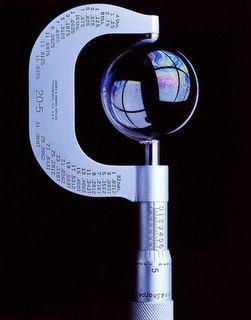
It is common mythology that until the time of Columbus "everyone thought that the world was flat." The falsity of this is shown by a figure I presented in class, a representation of a real globe which represented the state of European knowledge before Columbus sailed. Although Columbus -- and everyone else! -- was right about the shape, however, he was quite lucky in a different respect. He thought that he would have to cross a western ocean of only moderate size before reaching China. Of course, if the Americas had not been in the way, he would have faced an impossibly long journey of more than 15,000 miles! So he was wrong about the size, but not about the shape. (By the way, I have read speculations to the effect that Columbus purposely underestimated the likely length of the crossing in order to persuade Ferdinand and Isabella of Spain to fund his daring expedition.)

You may be surprised to learn that a correct understanding of the Earth's shape was current even two millennia before Columbus. Moreover, as we will see, even the size had been pretty well estimated, although that bit of information did not get reliably handed down. But how did such things come to be known?

As usual, we begin by asking how you yourself would demonstrate that the surface of the Earth is curved. If the world were much smaller, of course, it would be easy. Suppose for instance you were standing on top of a gigantic beach ball, looking at the surface on which you stand. You would certainly see a conspicuous "dropoff" on all sides. Unfortunately, the Earth is much too big to show that effect.

Still, there are alternatives. Indeed, by combining arguments of the following sort, Aristotle was able to conclude quite persuasively that the Earth is indeed spherical. You could:

  1. Travel long distances north-south and watch the stars. Suppose you see a star low on the southern horizon, and then walk or sail many hundred miles south. The star will now appear to be higher in the sky, well above the horizon, as Aristotle knew from the accounts of sailors. If the Earth were flat, this would not happen; a star which was low on the horizon would remain so as you travelled.


    (You have to observe the star at the same time of night, of course, rather than at some earlier hour when the star has not yet risen into the sky. The diurnal effects of rotation have to be correctly compensated for.)

    To take an extreme example, a person on the equator sees the North Star low on the northern horizon. As she travels north, the Pole Star is seen at higher altitude until, when she is right at the North Pole, it is overhead. For the same reasons, people living in Australia see constellations invisible from here in Canada (and vice versa: they cannot see the Big Dipper).

  2. Watch a boat sail away from shore. Of course, it gets smaller in appearance by virtue of its increasing distance, but it also seems to disappear over the horizon as though it is going down the far side of a hill. The hull disappears first, and soon only the tops of the masts and flags are visible.


    This would not happen on a flat Earth; the ancients recognized and correctly explained the phenomenon as due to the curvature of the Earth.


  3. Rely on analogy. There is a semi-philosophical argument based on the fact that the sun and moon are seen to be round. It might seem plausible, therefore, to suggest that the Earth must be spherical as well, on the grounds that this seems to be a favoured shape in the heavens. (This is actually a weak argument, of course: the sun and moon are `up there' in the heavens, while the Earth is `down here' and may be something quite different.)


  4. Watch eclipses: One can notice, as did Aristotle, that whenever there is a lunar eclipse, the edge of the Earth's shadow (which we see projected onto the lunar surface) always looks like the arc of a perfect circle. (By the way, the Earth's shadow is not responsible for the changing phases of the moon, as we will learn in the next section. Only during eclipses, which are very rare, do we notice the effects of the Earth's shadow at all - or at least that part of it which is projected onto the Moon's surface.)


    Aristotle concluded, rightly, that the inevitable circularity of the shadow is because the Earth itself is a sphere, reasoning that a sphere is the only shape that always casts a circular shadow. It is certainly true that a flat object (like a coin) can cast a circular shadow, if correctly oriented, but you would expect at least sometimes to see a shadow which looks flattened or ellipsoidal.

For all four of these reasons, Aristotle (probably quoting other thinkers as well) concluded, rightly, that the Earth is a large nearly-spherical ball. This knowledge was not lost in the succeeding millennia, despite the mythology surrounding the expeditions of Christopher Columbus. You should not necessarily believe everything you read!-- except for what I am writing here, of course.


The Size of the Earth

How would you measure the size of the Earth? The obvious way is to travel all the way around it, keeping track of how many miles you have covered. But why go that far? Why not travel, say, a quarter of the way around it, and multiply your answer by four? (If you need to put a fence around a square field, you need to pace out only one side of the field to find out what length of fencing you need in total.)

The problem is to work out when you have covered exactly a quarter of the Earth's circumference, but there is in fact a very simple way! All you have to do is start at the Earth's equator (the place from which the sun shines from directly overhead on March 21), and then travel North until the Pole Star is directly overhead, proving that you are right 'on top of the world.' When you first set off on your journey, the Pole Star is right down on your northern horizon; your journey of 10,000 kilometers changes that and proves to you that the Earth is about 40,000 km in circumference.

In other words, you can tell from the different altitude of various stars how far North or South you are on the globe. Although the principle is quite clear-cut, the notion of travelling thousands of kilometers is a bit daunting, but there are a couple of practical simplifications one can imagine adopting:

  • don't travel quite so far; and

  • use a particularly conspicuous star as a reference object to make the observations easy.

Indeed, to make the measurements really straightforward, let's observe the sun itself! - it's by far the brightest star in the sky. In a modern analogy, we are relying on the obvious fact that if we travel south (say, by flying down to Miami in December) we will see the sun at higher elevation (and lie out on the beach to sun-bathe). By quantifying that effect, we will determine the size of the Earth.

The procedure is quite straightforward (and some of you may even wish to try this experiment if you travel south during the Winter Break):

  • at one location on the globe, perhaps here in Kingston, work out how high the sun gets in the sky at the middle of the day, using the shadow of a vertical stick in the ground to measure the angles; and

  • from some other location due South of the first, make the equivalent determination on the same day (or as soon thereafter as can possibly be managed). Note that you must make the two observations as close together in time as possible because the sun's altitude changes significantly as the seasons progress, even at a fixed location, thanks to our orbit around the sun. (For this reason, using a prominent bright star is better, since its altitude will not vary with the seasons and it won't matter if you get held up a few days or weeks until you make the second set of observations. The trouble is that no star is bright enough to cast shadows. Still, there are other ways of measuring angles.) Then:

  • later, at your leisure, measure the distance between the two locations. Comparing the angles measured at the two sites tells you how far around the globe they are from one another, as a fraction of the full circle, and combining this with the distance between them in kilometers gives you the size of the Earth itself.

This is the logic which went into the important calculations made by Eratosthenes, as described on page 88 of your text. He knew that on June 22 the light of the Sun shone straight down a well at mid-day in the city of Syene, implying that the Sun was directly overhead then. Meanwhile, in Alexandria, which is about 500 miles north of Syene, a vertical stick cast a shadow at mid-day, which he accounted for by realising that the Earth was curved. (The stick is made vertical by comparing it to a plumb bob or hanging weight, so that it points straight down to the centre of the Earth.)

Eratosthenes hired people to pace out the distance, and in this way he was able to get a very good value for the size of the Earth -- long before Columbus! As it happens, he made a few small mistakes which more or less cancelled out. For instance, the distance which was paced out was not very precise, and Syene is not due south of Alexandria. But the cleverness of the idea is undeniable.


Degrees of Correctness

At this stage, I would like to emphasise a thought which will recur in other contexts later. Eratosthenes was roughly correct about the size of the Earth -- at least, that's what modern historians of science have concluded, although there is apparently some lingering doubt about the exact size of the units of measurement which he was using. But to me it would not matter a great deal if he had gotten an answer which was only half as large as the true circumference, or three times as big. The critical point is that Eratosthenes recognised the nature of the problem, found a method, and was able to derive an answer which was correct in spirit in the sense that he correctly deduced that the Earth was an immense body which was very much larger in extent than the then-known lands of the Mediterranean basin, the home of Greek civilisation at the time. The sense of the discovery is the wonderful thing, not the mere accident that the numerical value was also correct.


The Rotation of the Earth

The ancients assumed, naturally enough, that the Earth is at rest, with the whole cosmos rotating about us once a day, just as it appears. Part of the motivation was no doubt religious. They must have felt that we are in a divinely ordained place, at the centre of the universe, with everything else dancing around us in attendance. But there is also the practical consideration that you might expect to feel the motion if it is true that this large solid body is spinning like a top. Shouldn't it rumble and bounce like a fast-moving chariot, for example? And would we not feel a wind blowing in our faces if we were truly being carried towards the East in some unceasing diurnal motion? (Of course, we now recognize that the atmosphere is simply being carried along with the rotational motion.)

You may be surprised to learn that there are direct ways of proving that the Earth rotates - that it is we who are spinning, rather than the cosmos around us - and that it would still be possible for you to measure the Earth's rotation even if we were completely shrouded in clouds so that you could never see out to the stars and sun! (These are the objects which indicate to us that something is moving.) Even the ancients could, in principle, have reached the correct conclusion, although it requires a fairly deep physics understanding and, in one case, the ability to make some fairly difficult measurements.

How is this possible? There are three methods:

  1. Study the "figure" of the Earth:

    The Earth is not a perfect sphere: it is about 25 miles (40 km) thicker across the middle than it is from North pole to South pole. This arises from the rotation of the Earth (just as a thrown piece of spinning pizza dough flattens out). Despite its obvious rigidity, at least here at the surface, the Earth's materials are elastic enough [remember our discussion in earlier lectures] to deform under the influence of the spin. If you somehow stopped the spin, the Earth would relax into a perfectly spherical shape under its own enormous self-gravity. The material would not have enough structural rigidity to maintain the body of the Earth in its present flattened shape.

    By the way, Jupiter is gaseous rather than rocky, and consequently much less rigid in the outer parts. It also rotates very fast, once every 10 hours. As a consequence, it is noticeably flattened, even to the eye when seen through a telescope. By contrast, the Earth looks perfectly spherical, whether seen from space or as a scale model under casual inspection. The flattening is simply not very pronounced, but careful surveying of the Earth does show it.

    This would have been a hard test for the ancients to employ. They would have needed to carry out elaborate and precise surveying over very large distances - not easy. Moreover, they would have needed a deep understanding of the strengths of materials and so on, so as to interpret the discovery of the Earth's flattened figure. Little wonder that they did not make the discovery!

  2. Study a Foucault Pendulum:

    Imagine constructing a pendulum at the North Pole, hanging from a free-turning "universal joint". With a good push, set the pendulum swinging in a particular direction - say, towards the star Sirius. As the day progresses after that initial push, the Earth turns "underneath" the pendulum, which continues to swing back and forth in the same direction in space since there is no sideways force to make it turn. In effect, the "platform" on which you are standing (the Earth itself) turns beneath the pendulum. From your point of view, however, the pendulum's swing appears to be shifting in direction, one full rotation in every twenty-four hours.

    The behaviour of a Foucault pendulum is slightly more complex at lower latitudes, such as here at Kingston, but the principle is the same. Indeed we have one in the middle of Stirling Hall! As an experiment, take a look at it before a lecture one day, taking note of the direction in which the pendulum is swinging; then look again before the next lecture a couple of days later. You will see that the direction has indeed changed from our point of view.

    Note that the pendulum has to be suspended on a special universal joint so that it is free to turn (or rather not to turn: the hypothetical pendulum at the North Pole keeps the same orientation in space). If I put my child into a swing and give her a big push to start, so that she is swinging (say) in the direction of Lake Ontario, I will not find her swinging parallel to the shoreline a few hours later! Her swing is mounted at a couple of points on a rigid framework which turns with the Earth, which therefore carries the swing with it.

  3. Study `Coriolis Forces.'

    Visualise yourself standing on a moving "slidewalk," such as you find in an airport terminal. Now imagine tossing something (a set of keys, say) to a friend standing beside the slidewalk. The sideways motion imparted to you by the slidewalk, coupled with your outward toss, carries the keys at an angle so that you will miss your friend unless you `lead' him with the toss.

    In like fashion, objects on the Earth close to the equator are being carried to the East at about 1000 miles per hour (the Earth is about 25,000 miles in circumference, and spins once around every 24 hours: see the figure on page 48). Things farther north are moving less rapidly, and something at the North Pole doesn't move through any distance at all - it merely turns around, on the spot, once a day.

    Now, suppose someone fires a rocket from the equator towards a target due north of them (say, the people of Ecuador decide to attack Ottawa). The rocket would seem to veer off to the East, just as the keys missed our friend. This is a real effect which has to be considered by rocketry experts and even by naval gunners shooting at targets tens of miles away. This effect is a manifestation of the so-called `Coriolis force.' (See pages 286-289 of your text.)

    These considerations explain the familiar spiral of hurricanes. If a big low-pressure region forms in the Earth's atmosphere somewhere just north of the equator, you might expect the air around it simply to move directly into the low-pressure center. But the air moving up from the equator has an excess component of sideways motion compared to the air which was originally located on the north side of the new-formed hurricane. This makes the air spiral or swirl in, in a counter-clockwise direction. In the southern hemisphere, hurricanes spiral the other way!

    By the way, this effect is much too feeble to affect day-to-day small-scale phenomena like water flowing out of sinks and tubs, despite the fact that it is commonly believed that "sinks drain the opposite direction in the Southern hemisphere." In fact, the way sinks drain out (or bathtubs empty, or toilets flush) depends on their shape, how you pull the plug, etc. It is true that in the Northern hemisphere the water on the south side of the tub is moving eastward faster than the water on the north side, but the difference is extremely small. Very carefully controlled experiments, with specially designed basins, can show the effect, but in real life the 'Coriolis forces' arising from the Earth's rotation are not important - unless you live in hurricane country, or expect a naval bombardment!


International Monetary Fund warns of Property Bubble Tension in Ireland

Background

Ireland's economic performance remains strong. In recent years, real GNP growth was one of the highest among industrial countries; the unemployment rate was among the lowest; and HICP inflation declined to close to the euro area average. Employment growth was rapid, reflecting strong immigration and rising labor force participation. This remarkable performance reflected both good policies and fortunate circumstances. Prudent government spending led to declining government debt; low taxes on labor and business income encouraged labor supply and investment; and flexible labor and product markets helped growth. At the same time, favorable demographics boosted the working-age population, and participation in EMU lowered interest rates.

However, economic activity has become reliant on building investment and competitiveness has eroded. The share of the construction sector in economic activity has increased and is now one of the highest in Europe. Bank credit to property-related sectors has grown rapidly and now accounts for more than half of total bank lending. Household debt as a share of household disposable income rose to about 130 percent in 2005, among the highest in Europe. Reflecting the expansion of the labor-intensive construction and services sectors, labor productivity growth has declined. The combination of the slowdown in productivity growth, faster wage growth in Ireland compared to its trading partners, and the appreciation of the euro, has led to an appreciation of the ULC-based real effective exchange rate. Partly as a result, the contribution of net exports to growth has fallen steadily since 2001. After being in balance for several years, the external current account registered a deficit of about 2½ percent of GDP in 2005.

Executive Board Assessment

The Executive Directors commended Ireland's continued impressive economic performance, which has been supported by sound policies, including prudent fiscal policy, low taxes on labor and business income, and labor market flexibility. Economic growth is strong, unemployment is low and labor participation rising, and government debt has been reduced dramatically over the past two decades. Nevertheless, Directors observed that growth has become increasingly unbalanced in recent years, with heavy reliance on building investment, sharp increases in house prices, and rapid credit growth, especially to property-related sectors. At the same time, competitiveness has eroded, reflecting the combination of faster wage growth in Ireland compared to its trading partners, declining productivity growth, and the appreciation of the euro against the U.S. dollar. Directors observed that Ireland's small, highly open economy is also vulnerable to external shocks.

Directors expected economic growth in 2006-07 to remain strong, driven by domestic demand and accompanied by a widening current account deficit and continued rapid credit growth. While the contraction of the construction sector to a more sustainable size over the medium term is likely to be smooth, Directors noted that an abrupt correction cannot be ruled out.

Directors welcomed the Financial System Stability Assessment Update, which finds that Ireland's financial sector soundness indicators are generally strong and that the major lenders have adequate buffers to cover a range of shocks. The recent increase in the risk-weighting on high loan-to-value residential mortgages is an important signal of the need for banks to differentiate between higher- and lower-risk lending within an asset class. Directors suggested that the Financial Regulator continue to monitor banks' risk management practices, including for commercial property lending. Going forward, they called for continued updating of the stress-testing framework, and further strengthening of the regulatory and supervisory framework, especially for insurance.

While recognizing that Ireland's fiscal position is sound, most Directors considered that a modest fiscal tightening would be desirable in 2007, given the strength of domestic demand, potential risks of a hard landing, and the need to prepare for population aging. Slowing the growth of current spending to slightly below nominal GDP growth would also help prevent inefficiencies that could otherwise emerge given the rapid increases in spending in recent years. A number of Directors, however, saw less merit in fiscal tightening at the current juncture, pointing to the need for further increases in spending to achieve social goals, as well as to the recent tightening of euro area monetary policy. Directors agreed that improvements in public services remain a key priority, and, in this context, encouraged the authorities to focus on value for money, including by monitoring government outputs and extending multi-year envelopes to current spending. They welcomed the authorities' plans to further deepen the public debate on fiscal priorities.

Directors considered that continued wage moderation and labor market flexibility are essential to support competitiveness. The implementation of the new social partnership agreement should continue to allow flexibility in wage increases at the firm level and minimize the increase in the restrictiveness of employment protection legislation.


Ireland: Selected Economic Indicators


2002 2003 2004 2005 2006

1/


Real Economy (change in percent)


Real GDP

Real GNP

Domestic demand

Exports of goods and services

Imports of goods and services

HICP

Unemployment rate (in percent)

6.0
2.8
4.3
4.5
2.4
4.7
4.4
4.3
5.5
4.5
0.5
-1.2
4.0
4.7
4.3
3.9
3.6
7.3
8.6
2.3
4.5
5.5
5.4
8.0
3.9
6.5
2.2
4.3
5.8
6.2
6.7
6.4
7.5
2.8
4.3

Public Finances (percent of GDP)


General government balance

Structural balance 2/

General government debt

-0.4
-1.3
32.2
0.2
0.4
31.1
1.5
1.9
29.6
1.0
1.0
27.4
0.7
0.5
25.9

Money and Credit (end-period, percent change)


M3 3/

Private sector credit 4/

9.3
15.0
...
17.9
22.5
26.6
19.8
28.8
20.8
29.8

5/

5/

Interest Rates (end-period)


Three-month

10-year government bond yield

2.9
4.3
2.1
4.6
2.2
3.7
2.5
3.3
2.9
4.1

5/

6/

Balance of Payments (percent of GDP)


Trade balance (goods and services)

Current account

Reserves (gold valued at SDR 35 per ounce

end of period, in billions of SDRs)

17.1
-1.0
4.0
16.0
0.0
2.8
14.9
-0.6
1.9
12.7
-2.6
0.6
11.5
-3.0
...

Exchange Rate


Exchange rate regime

Present rate (July 17, 2006)

Member of euro area

US$ per euro 1.2541


Nominal effective rate (1995=100)

Real effective rate (1995=100, CPI based)

89.7
98.0
97.4
107.9
102.6
113.7
98.3
109.2
99.8
112.0

7/

7/


Sources: Central Statistics Office; Department of Finance, Datastream and IMF International Financial

Statistics.

1/ Staff projections, except where noted.

2/ In percent of potential GDP.

3/ The methodology used to compile M3 has been amended in line with Eurosystem requirements.

Therefore, there is a break in the series.

4/ Adjusted change, which includes the effects of transactions between credit institutions and non-

bank international financial companies and valuation effects arising from exchange rate

movements.

5/ As of May 2006.

6/ As of June 2006.

7/ As of April 2006.


1 Under Article IV of the IMF's Articles of Agreement, the IMF holds bilateral discussions with members, usually every year. A staff team visits the country, collects economic and financial information, and discusses with officials the country's economic developments and policies. On return to headquarters, the staff prepares a report, which forms the basis for discussion by the Executive Board. At the conclusion of the discussion, the Managing Director, as Chairman of the Board, summarizes the views of Executive Directors, and this summary is transmitted to the country's authorities.

Friday, July 28, 2006


Super Golf Rebel opens Cork Golf course

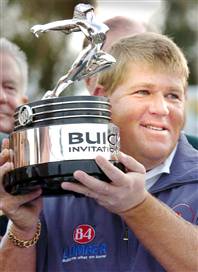
Golf superstar John Daly today opened the new €50m Blarney Golf Resort — the first course he has designed in Europe.

The golfer, nicknamed ‘Wild Thing’, said he was delighted with the progress made by the golf course.

“I have no doubt that we will tweak it as we get to know it better,” he said. “All significant golf courses tend to be work in progress. We have laid solid foundations for what I believe, will become a must-play Irish course.”

The US golfer arrived in Cork on Saturday night after failing to make the cut at the British Open.

The two-time Major winner also had the clubs out yesterday when playing 18 holes at Blarney.

Blarney Golf Resort is the brainchild of local developer John Kelly and his partner Frank McCarthy. It consists of the 62-bedroom Ramada Hotel, 56 luxury golf lodges and the Sentosa Spa.


About the Ryder Cup:
The Ryder Cup takes place at The k club, Straffan, Co. Kildare, Ireland, Sept 22 -24 206.

The Ryder Cup is a golf trophy contested biennially in an event officially called the Ryder Cup Matches by teams from Europe and the United States. The Ryder Cup was born in 1926, with the US competing against Great Britain on the East Course, Wentworth Club, Virginia Water, Surrey, Great Britain. After more than 45 years of US dominance (Britain won only once between 1935 and 1973) it was extended to Britain and Ireland in 1973 and then Europe in 1979, which made the Cup considerably more competitive. Currently, the Ryder Cup Matches are jointly administered by the PGA of America and the PGA European Tour.

Thursday, July 06, 2006

Ma calls from Ireland (Boondock Saints Deleted Scene)

this is brilliant
Baywatch 2006

if your from cork this is funny, if not forget it langer.